Do You Need a Health and Safety Program in Alberta?
The more useful answer is a little more complicated.
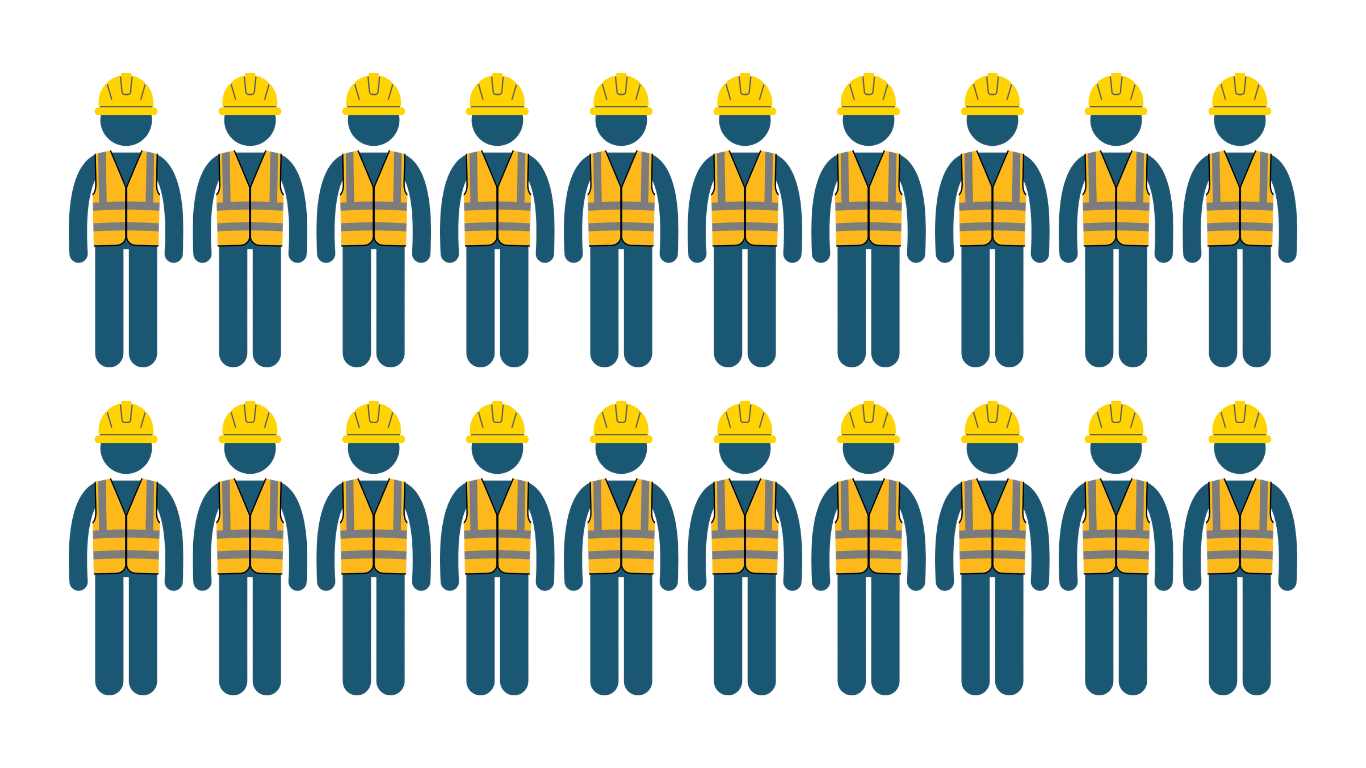
Under Alberta's Occupational Health and Safety Act, an employer that regularly employs 20 or more workers must establish and implement a health and safety program. If an employer operates multiple work sites, workers across those sites count toward that threshold.
But the 20-worker rule only tells you when you need a formal health and safety program. It doesn't tell you everything your company needs to do to comply with occupational health and safety legislation.
That distinction matters.
What is a health and safety program?
A health and safety program is the system an organization uses to manage workplace health and safety.
It shouldn't just be a manual.
A functioning program connects the policies, procedures, and responsibilities the company establishes with what is actually happening at its work sites. Hazard assessments, worker training, inspections, emergency planning, incident investigations and corrective actions can all form part of that system.
Alberta's current legislation gives employers flexibility to develop a program appropriate to their workplace rather than prescribing one identical program for every employer. That makes sense. A residential renovation contractor, an excavation company and a manufacturing facility don't have the same hazards simply because they employ the same number of people.
Your safety program needs to reflect your work.
When is a health and safety program required in Alberta?
Under Alberta's OHS Act, employers that regularly employ 20 or more workers must establish and implement a health and safety program.
The word implement is important.
Having a document called "Health and Safety Program" sitting in a binder or shared drive does not, by itself, mean you have an effective program. Policies and procedures must make their way into operations through training, hazard assessments, inspections, communication, supervision, and recordkeeping.
For employers with multiple work sites, the count isn't reset at each location. The total number of regularly employed workers across the employer's work sites determines7 whether the 20-worker threshold has been reached.
What if you have fewer than 20 workers?
Having fewer than 20 workers doesn't mean occupational health and safety requirements suddenly disappear.
It means the specific requirement to establish a health and safety program based on the 20-worker threshold does not apply.
Employers with fewer than 20 regularly employed workers still have responsibilities under Alberta's OHS legislation and need documentation and practices appropriate to their operation.
Depending on the work, that can include requirements related to hazard assessment and control, worker competency and training, emergency response, first aid and specific workplace hazards.
A company's size can change how the safety system is structured.
It doesn't make the hazards disappear.
Do subcontractors count toward the 20 workers?
This is where two different questions often get mixed together.
The 20-worker threshold applies to an employer and the workers it regularly employs. A subcontractor operating as a separate employer does not become one of another company's employees just because it has been hired to perform work.
But that does not mean subcontractors are outside your safety responsibilities.
Alberta's OHS legislation recognizes different work site parties, including employers, contracting employers, owners and prime contractors. Depending on the project and your role, you may have responsibilities for workers who aren't your employees.
Once multiple employers are involved at a work site, coordination between them also becomes important. On construction work sites, having two or more employers involved triggers the requirement for a prime contractor.
So instead of only asking:
"Do my subcontractors count toward my 20 workers?"
It's worth also asking:
"What responsibilities do I have when multiple employers are involved in the work?"
Those are two different questions.
Can you use a health and safety program template?
Absolutely.
There is no particular prize for writing every policy from scratch.
A properly developed template can provide a strong foundation for a health and safety management system. Building the core program to a recognized standard such as COR can also create a useful framework for managing the basics consistently.
The problem starts when the template becomes the finished product instead of the starting point.
Your operational risks determine where additional policies, procedures and controls may be required.
A company performing ground disturbance may need requirements irrelevant to an office. A company exposing workers to occupational noise may need exposure assessments and controls that a generic program doesn't address.
Other operations can introduce requirements related to fall protection, confined spaces, hazardous substances, mobile equipment and numerous other hazards addressed by Alberta's OHS legislation.
The program needs to account for the work you actually perform.
A very impressive table of contents doesn't fix a compliance gap.
Is a COR-ready safety program automatically compliant?
No.
COR and legislative compliance are closely related, but they aren't interchangeable.
Alberta's Certificate of Recognition program evaluates an employer's health and safety management system against an established standard. Building a program to a COR standard therefore provides a strong foundation for managing health and safety.
But a COR audit measures the health and safety management system.
Your organization still needs to identify and comply with the legislation applicable to the work it actually performs.
That means an organization can have COR and still have a compliance issue related to a specific hazard or operation.
Occupational noise is one example. Ground disturbance may be another. The requirements that apply depend on the work being performed.
COR doesn't replace the need to understand your operational risks and the legislation attached to them.
When does a safety program need to be customized?
Customization should be driven by risk and operations, not by a desire to make a manual longer.
Start with what the company actually does.
What work are your employees performing?
What equipment are they using?
What environments are they working in?
What hazards are they exposed to?
What legislation applies to those activities?
A relatively straightforward operation may be well served by a properly implemented program built from a strong template.
As the work introduces additional hazards, the program needs to account for them.
That's where policies, procedures, safe work practices, training requirements and other controls specific to the operation begin to matter.
The objective isn't to create the biggest safety manual possible.
It's to make sure the system actually addresses the work.
What should a health and safety program accomplish?
A useful safety program should answer some practical questions:
Who is responsible for what?
What hazards do we face?
How are those hazards controlled?
How do workers know what is expected of them?
How do we know inspections, training and other required activities are actually happening?
What happens when something goes wrong?
How are problems corrected?
How does information from incidents, inspections and workers make its way back into the program?
If the program can't answer those questions, adding another policy probably isn't the first thing I'd recommend.
A good health and safety program provides structure for managing risk and shows how the organization approaches its responsibilities and adapts as the work changes.
It should support the work.
It shouldn't exist beside it.
Sources and further reading
This resource is based on current Government of Alberta occupational health and safety legislation and guidance, including:
Last reviewed: September 2026
This resource provides general information about occupational health and safety in Alberta and is not legal advice. Requirements can vary depending on the work, work site and parties involved.